
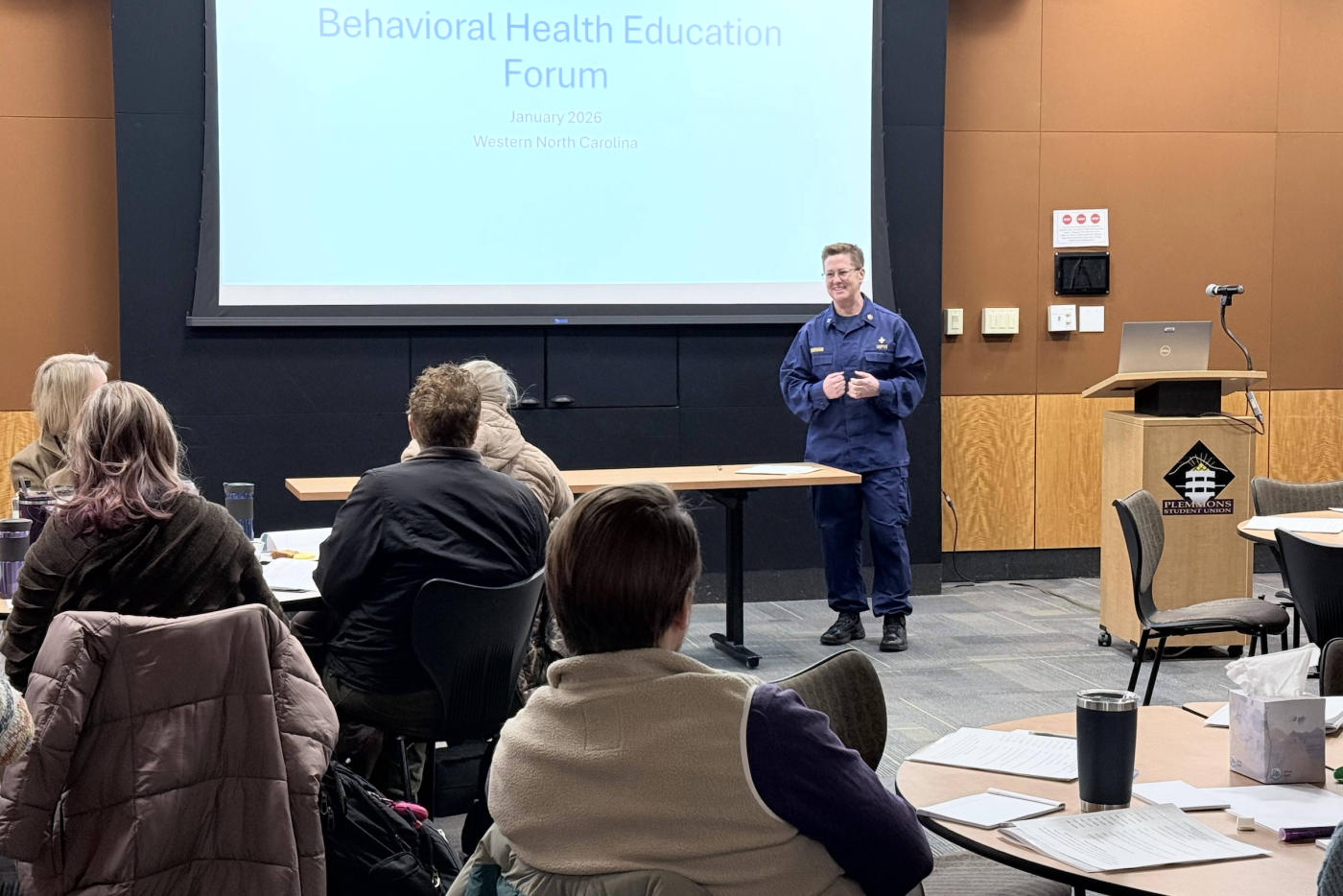
On Jan. 29, 2026, educators, administrators, staff, faculty, counselors, and social workers from North Carolina’s K-12 and higher education communities came together at Appalachian State University in Boone for a daylong Behavioral Health Education Forum.
Attendees learned trauma-responsive, healing-centered strategies; received support for educator well-being and recovery; strengthened collaboration within school systems; and gained tools and resources to address behavioral health and recovery needs in the classroom, at home, and on campus. The event was hosted in partnership with the Governor’s Recovery Office for Western North Carolina (GROW NC) and U.S. Departments of Health and Human Services’ Administration for Strategic Preparedness and Response (ASPR), in collaboration with the U.S. Department of Education and with support from the AMY Wellness Foundation.
The forum was offered in response to growing concern among educators across western North Carolina about the impacts of a regionwide shortage of behavioral health providers. The National Association of School Psychologists recommends a ratio of one school psychologist per every 500 students. In North Carolina, the ratio is one psychologist to about 2,000 students.
“The shortage of behavioral health providers impacts all communities, and the need is especially great in rural areas, “said Rudolph Francin, ASPR’s Disaster Behavioral Health Lead. “Forums like this help to create behavioral health-informed communities, bolstering the capabilities of educators to help their students and take care of each other.”
Attendees discussed trends and strategies with experts and were connected with resources and techniques to support the behavioral and mental health needs of their students.
During the first half of the forum, educators learned about guiding principles for supporting each other, then participated in group discussions to identify how they are already practicing these concepts:
- Belonging: You are not alone. Connection strengthens recovery.
- Mastery: Trauma-responsive skills can be learned, strengthened, and shared.
- Interdependence: Collaboration across roles keeps school communities safer and stronger.
- Generosity: Sharing knowledge and care is how we support one another and move forward.
Forum attendees were offered a 35-page resource booklet, “Resilience in Our Schools and Communities,” designed for all schools, families, and communities in western North Carolina recovering from Hurricane Helene. The guide is meant to be practical, easy to share, and accessible to people of all ages and backgrounds.
Collaborating to Address Needs
In North Carolina, agencies have worked together to make the most of available resources while underscoring the need for additional funding to address behavioral health needs. Leaders from GROW NC joined the North Carolina Department of Public Instruction (NCDPI) and the North Carolina Department of Health and Human Services (NCDHHS) in pulling together funding for out-of-school behavioral health and engagement programs. Visit WNC Thrive to find a listing of available resources by county for helping young people heal, reconnect, and thrive through safe, supportive, engaging activities – all at no cost to families.
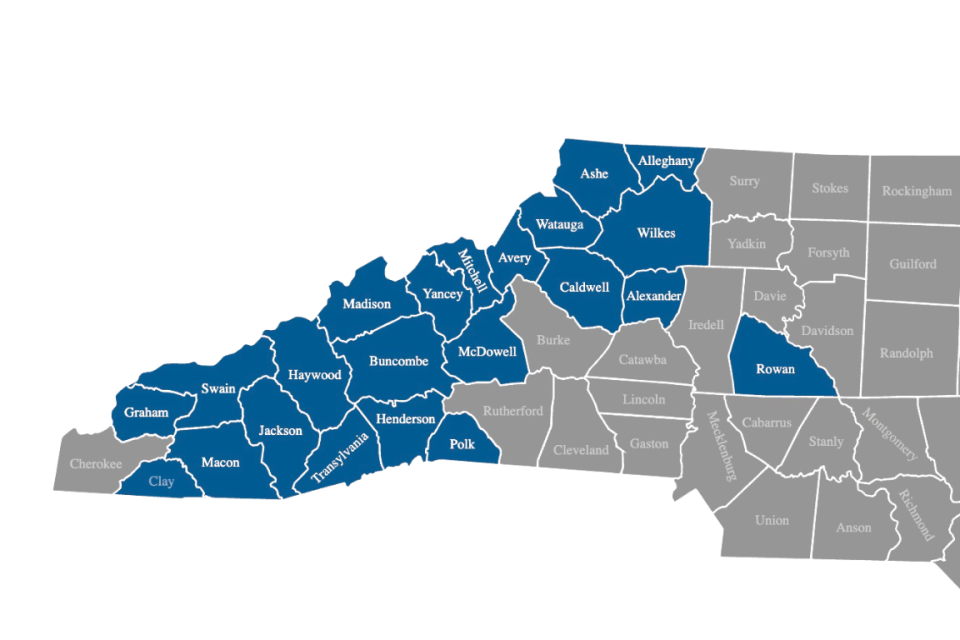
State leaders have twice advocated for funding an extension to continue making the NCDHHS HOPE4NC program available to individuals experiencing stress, emotional fatigue, or mental health crisis related to Hurricane Helene recovery. The program is now funded through April. HOPE4NC is free, confidential, and available 24/7 through the helpline at (855) 587-3463.
Working together, state leaders have also been successful in expanding mental and behavioral health workshops offered through Resources for Resilience. Leaders from GROW NC and NCDHHS joined the organization to advocate for additional funding, helping these services reach artists, small business center counselors, teachers, and other community members who are in need of support while being heavily relied on by their communities as resources or outlets. Vaya Health continues to provide weekly opportunities for connection and learning through Resources for Resilience.
“There is widespread awareness that behavioral and mental health needs continue to exceed the number of providers available to communities,” said Matt Calabria, GROW NC Director. “We are thankful to all of the local, state, and federal partners who have joined together to bolster existing avenues of support while educating about the stark need to address the shortage of behavioral health providers in North Carolina.”
NCDHHS is committed to integrating mental health into every aspect of the health care system, including prevention, early intervention, crisis care and ongoing support. Read about the Licensed Workforce Loan Repayment Program and the new Public Service Leadership Program.
Visit our WNC Recovery Stories page to learn more about the people and organizations making a difference in western North Carolina.