
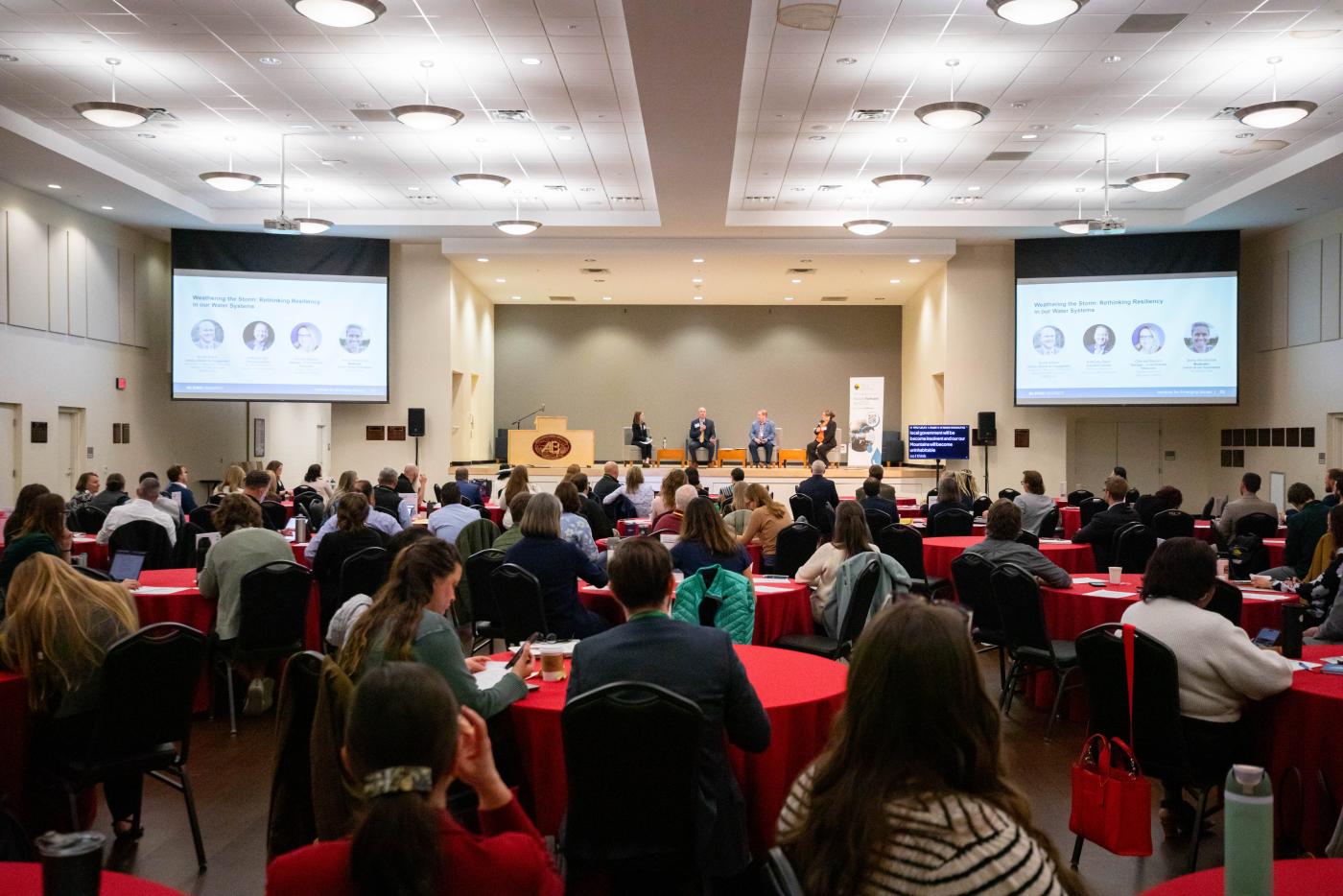
In February, Governor Josh Stein and leaders from the Governor’s Recovery Office for Western North Carolina (GROW NC) joined cross-sector leaders in a statewide conversation about the future of water in North Carolina.
The 2026 Emerging Issues Forum: Future Forward Water brought together 500 people representing a variety of communities and sectors, all interested in learning about the state’s infrastructure future, aging “hidden” infrastructure, the resiliency of our water systems, workforce development needs, and more.
Attendees gathered simultaneously in Asheville, Winston-Salem, and Morehead City, following similar agendas with localized conversations. From utility providers and conservationists to local and state government officials, key stakeholders gathered to identify and discuss water-related issues communities are facing.
“We have a lot to prepare for. We all need access to clean, affordable water, and our response to these challenges must take into consideration local conditions,” Institute for Emerging Issues Director Sarah Hall said during her welcome remarks in Winston-Salem. “Some areas of the state are facing intense growth pressures while others are losing population and businesses. We structured the agenda to allow for discussion of these common themes, with local voices speaking to these conditions.”
Forum Highlights
Rethinking Resiliency in Our Water Systems: A conversation with local leaders, discussing the pressure extreme weather places on our drinking water, wastewater, and stormwater systems, offering insights on how communities can prepare today for a more resilient future.
Hidden Water Infrastructure: A discussion about aging infrastructure as one of the greatest threats to local communities’ ability to deliver safe, reliable, and affordable water.
Investing in the Water Workforce: A dialogue about the challenge of bringing younger workers into the water workforce, offering solutions around community college training, apprenticeships, certification reforms, and industry partnerships.
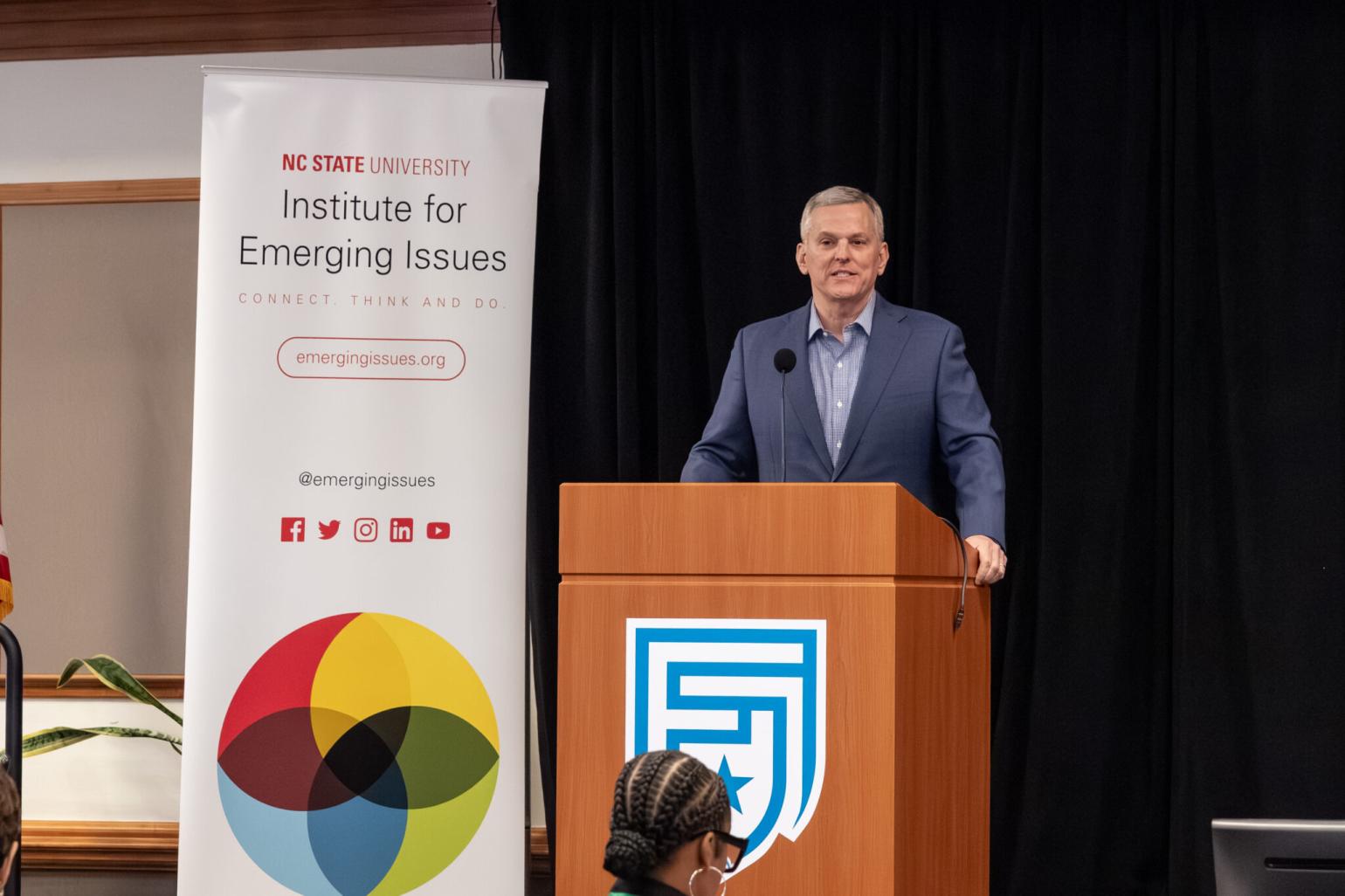
Governor Stein addressed Winston-Salem attendees in person and spoke via video in Asheville and Morehead City.
“We need clean, reliable water for drinking, growing crops, manufacturing, and generating electricity. That’s why it’s so important to work together to make sure North Carolina has access to clean and reliable water,” said Governor Stein. “It’s an honor to continue to tackle this and other critical issues at this year’s Emerging Issues Forum, bringing together people from a variety of perspectives to build a safer, stronger, and more resilient North Carolina.”
During the afternoon session, Governor Stein outlined his infrastructure priorities. He addressed the ongoing need to strengthen our state water systems and highlighted innovative solutions for stormwater management, as well as support for strengthening drinking water and wastewater systems while also tackling PFAS and other emerging contaminants.
Representing GROW NC, Deputy Director for Engagement Scott Elliott participated in the Asheville forum. He joined a panel discussion about water systems and resiliency, emphasizing the importance of regional collaboration in the development of more modern and redundant water systems. He underscored the need for land protection and workforce development.
“The way western North Carolina communities have come together to support each other and share information and resources has made a tremendous difference during Hurricane Helene recovery,” Elliott said. “It’s critical that leaders continue to share their experiences, learn together, and build toward the future together.”
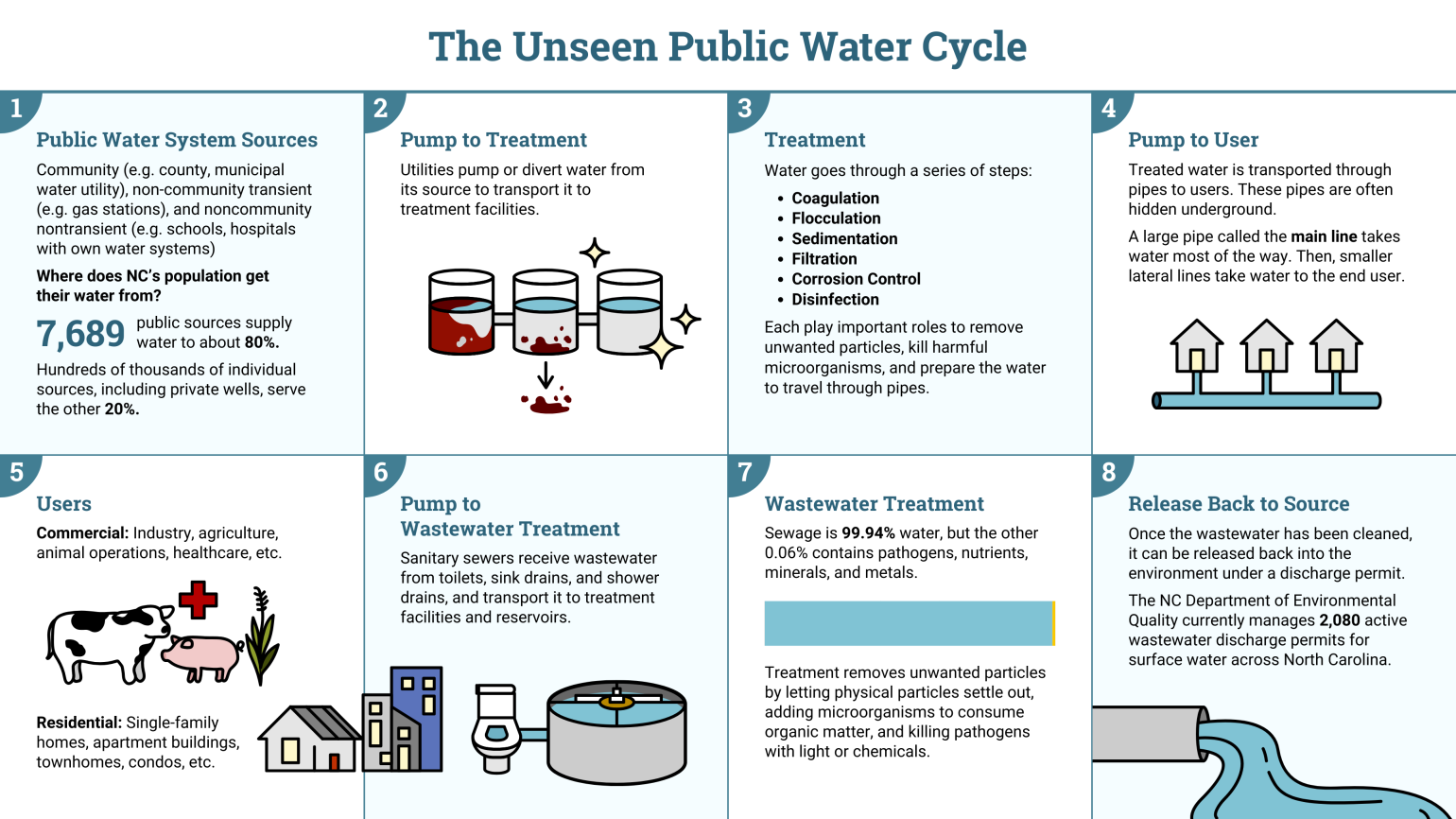
Shared Resources
Strategies for Strengthening Our Water Infrastructure – Strategies for meeting North Carolina’s water infrastructure challenges and taking advantage of opportunities, as recommended by the Institute for Emerging Issues’ Water Infrastructure Advisory Council.
Public vs. Private Water Systems – Learn about the two systems that connect North Carolina citizens with water.
Steps of the Public Water Cycle – Learn about the steps that play an important role in removing unwanted particles, killing harmful microorganisms, and preparing water to travel through pipes. (Download a PDF)
The “Trilemma” of a Water Utility – Learn about three conflicting challenges water utilities face: paying their bills, setting affordable rates, and maintaining the safety of their water. (Download a PDF)
The 2026 Emerging Issues Forum is part of the 2025-2027 Future Forward Infrastructure series. The event marked 40 years of the Emerging Issues Forum, with a longstanding goal of connecting North Carolinians across perspectives and sectors to address issues affecting the future of our state.
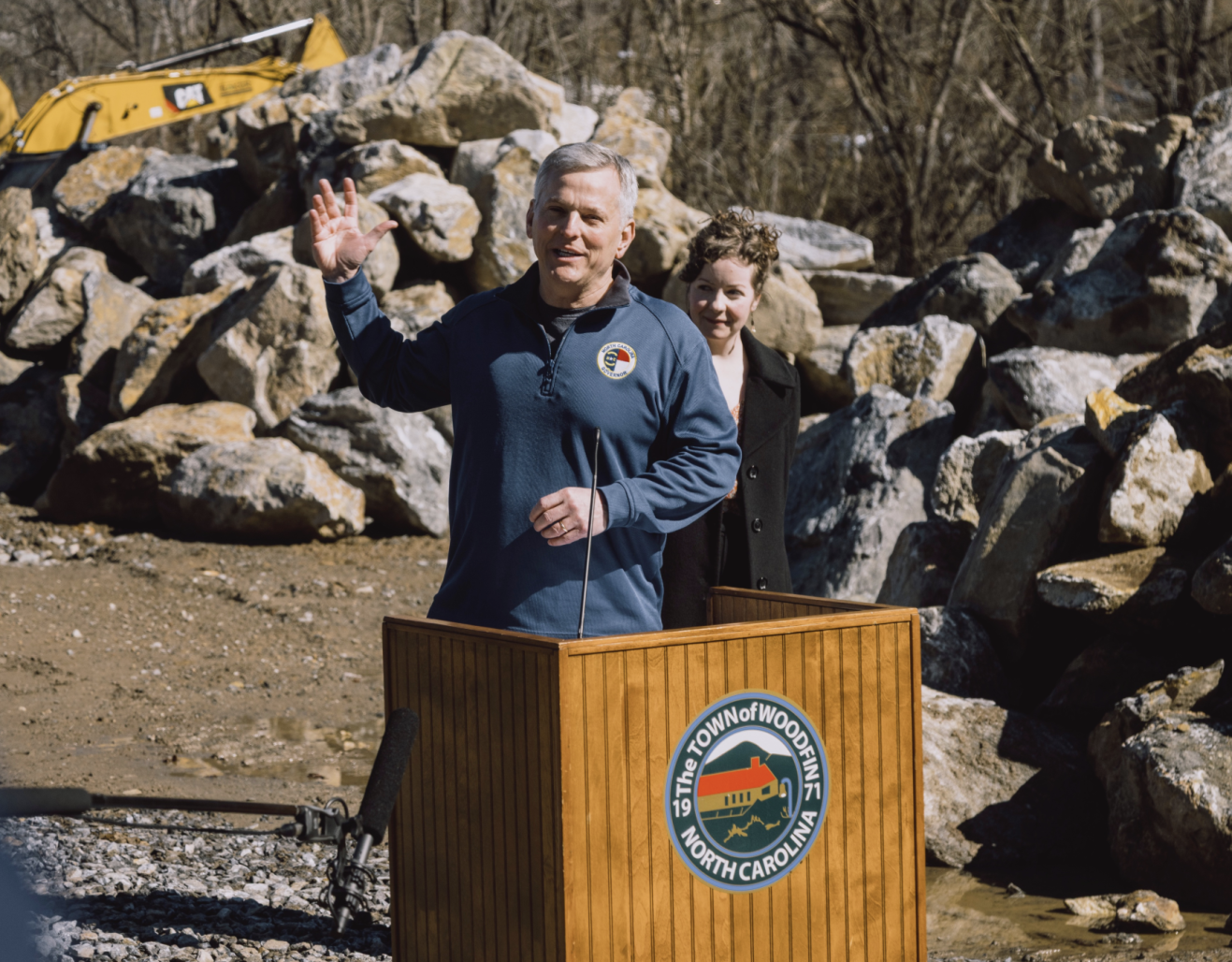
State Funding for WNC Water Projects
Since January 2025, the State of North Carolina has awarded nearly $1.4 billion to communities across the state to improve sewer, drinking water, and stormwater management systems, water treatment plants, and stream restoration.
“Families have to know that when they turn on the tap, their water is clean and safe,” Governor Stein said. “I look forward to seeing these projects come to life.”
Learn about recent water, wastewater, and infrastructure awards made by the North Carolina Department of Environmental Quality to help communities recover from Hurricane Helene:
- Governor Stein, Department of Environmental Quality Announce $472 Million for Drinking Water and Wastewater Projects
- Governor Stein, DEQ Announce $5.7M for Flood Resilience Projects in the French Broad River Basin
- DEQ awards $7.3 million for Helene-damaged dam repairs, opens second application period
Visit our WNC Recovery Stories page to find more stories about the people and organizations making a difference in western North Carolina.