
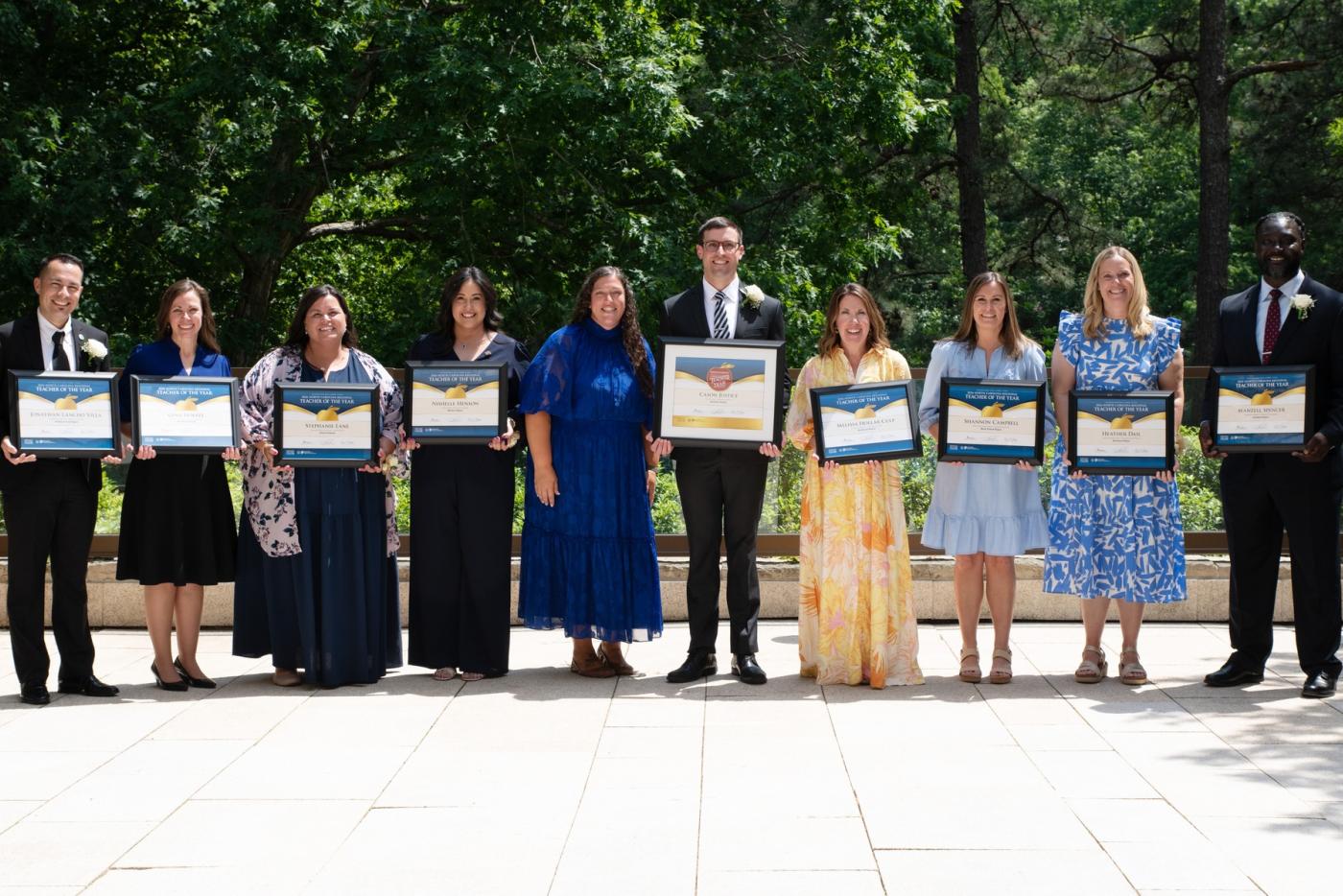
North Carolina’s regional Teacher of the Year finalists for 2026 include three western North Carolina educators recognized for their outstanding leadership and excellence in teaching. The mission of the North Carolina Teacher of the Year Program is to promote the profession through advocacy and support while recognizing outstanding teaching professionals who are implementing best practices in classrooms across North Carolina. Learn more about the contributions of Gina Holste (Watauga County), Nishelle Henson (Macon County), and Melissa Hollar Culp (Lincoln County) as we recap celebrations held across the state May 4-8, 2026, in celebration of National Teacher Appreciation Week.
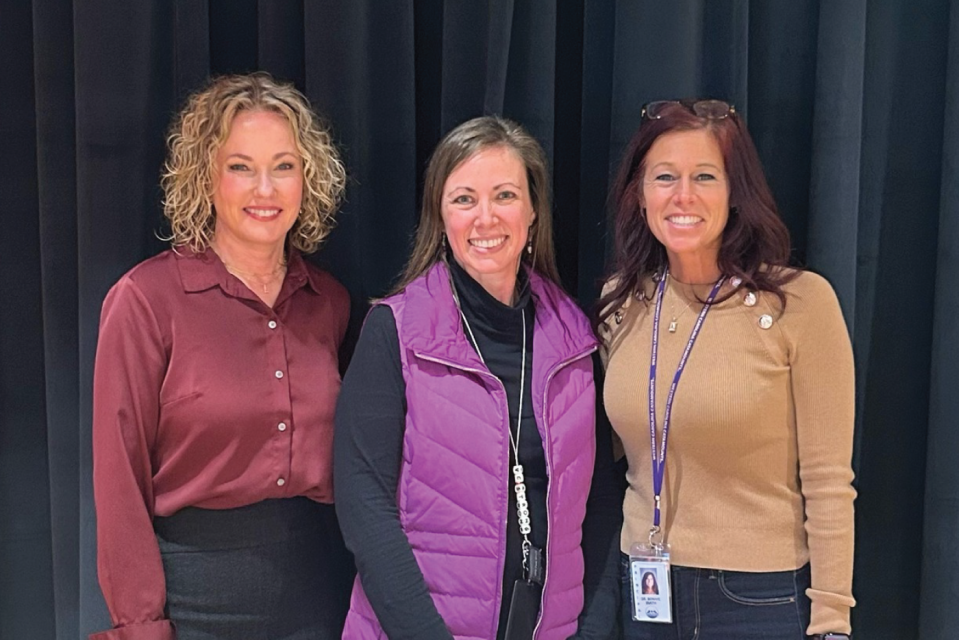
Gina Holste: Northwest Region Teacher of the Year
As a K-5 reading specialist at Valle Crucis School, Gina Holste believes that the art of teaching is about two things: the mission and the people. That philosophy guided her response to Hurricane Helene in 2024. With her classroom destroyed, she worked with students in hallways, on the front porches of school buildings, in corners of shared offices and on picnic blankets outside. She helped create an afterschool program, Learning Lodge, for grades 2-4 to mitigate the effects of lost instructional time.
“Despite losing everything in her teaching space, she immediately reached out to families to ensure every student felt supported and connected,” Valle Crucis School Principal Dr. Bonnie Smith said. “She taught in multiple temporary spaces, sometimes with little more than her resourcefulness and creativity, yet instruction never stopped. Her ability to remain intentional, personal, and student-centered in such circumstances is a testament to her character and commitment.”
Read more about Gina Holste.
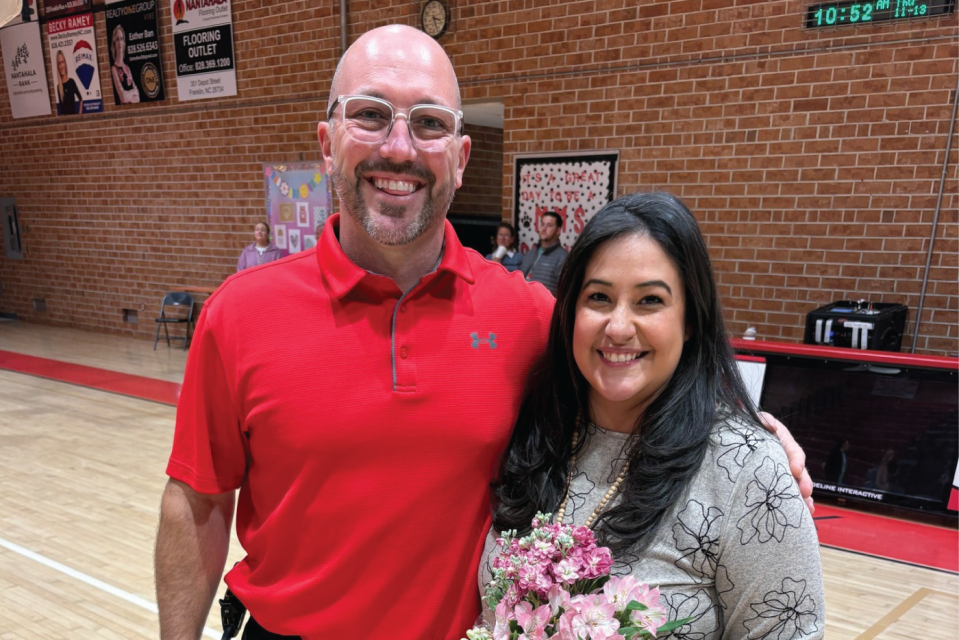
Nishelle Henson: Western Region Teacher of the Year
For Macon Middle School math teacher Nishelle Henson, teaching math means making the subject accessible and fun for students of all ability levels and backgrounds. Always making room for growth and possibility, she is well-known for redirecting reluctant students by exclaiming, “You're not good at math – yet!”
“Her contributions have strengthened Macon Middle School’s instructional program, raised student achievement, and reinforced confidence in our district’s capacity to prepare students for future success,” said Josh Lynch, superintendent of Macon County Schools.
A former NC Teaching Fellow, Henson has advocated for the teaching profession at events across the state through organizations like the Friday Institute for Beginning Teachers and Public School Forum. In her own district, she makes herself a resource for beginning teachers, speaking with students in education classes at local universities, opening up her classroom for observation, and providing support for coworkers who have not been traditionally prepared.
Read more about Nishelle Henson.
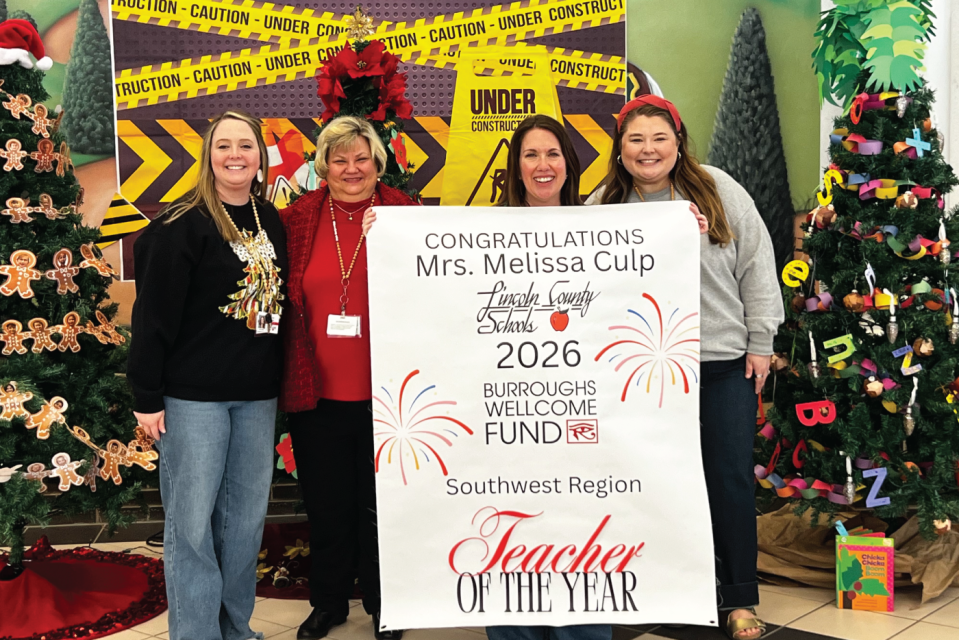
Melissa Hollar Culp: Southwest Region Teacher of the Year
Melissa Hollar Culp is a second-grade teacher and K-5 reading specialist at St. James Elementary School in Lincoln County. Noticing an increasing number of students having experienced trauma, Culp worked with her school’s guidance department to learn about trauma-informed teaching. She used what she learned not only in her own classroom, but also during planning for schoolwide initiatives like the annual vocabulary study. Her dedication to teaching stands out to her colleagues and the school community.
Principal Shanti Clancy wrote in a letter of recommendation for Culp’s Teacher of the Year application that her professional commitment is matched only by her devotion to her students.
“It’s rare to find an educator who excels equally in instruction, leadership, mentorship, and policy engagement,” Clancy said. “Melissa does this every day, with professionalism and boundless energy. She strengthens our school culture, advances literacy equity, and shapes educational systems.”
Since 2013, the North Carolina Department of Public Instruction (NCDPI) has been proud to partner with the Burroughs Wellcome Fund to honor North Carolina teachers. The state has recognized outstanding teachers through its Teacher of the Year program since 1970.
Putting State Dollars to Work on School Recovery
State funding programs aimed at helping school communities recover from Hurricane Helene have included support for school nutrition programs and employees, infrastructure grants, and capital recovery funding. Below are just a few of the programs making an impact on school recovery in western North Carolina.
- The School Nutrition Employee Compensation Program provided more than $2.5 million to pay school nutrition employees during school closures, as directed by the Disaster Recovery Act – Part 2, with funds serving 29 school systems and three charter schools.
- Funding for the repair or replacement of food nutrition equipment, food, andsupplies in Helene-impacted schools was provided through the NC Department of Public Instruction, serving 318 schools and 149,470 students.
- Capital recovery funds totaling $50 million have supported the recovery of public school facilities, serving 21 schools in eight districts. An additional $31 million has been directed to offer continued support with the repair and renovation of facilities for local school administrative units and lab schools with unmet needs.
- An $8 million competitive grant program offered through the NC Department of Public Instruction is available for Helene-impacted public schools to support the repair or replacement of school buildings or infrastructure damaged by the disaster. This funding is intended to support schools with damage or repairs that were denied insurance coverage and federal aid.
Visit our WNC Recovery Stories page to find more stories about the programs, people, and organizations making a difference in western North Carolina.