
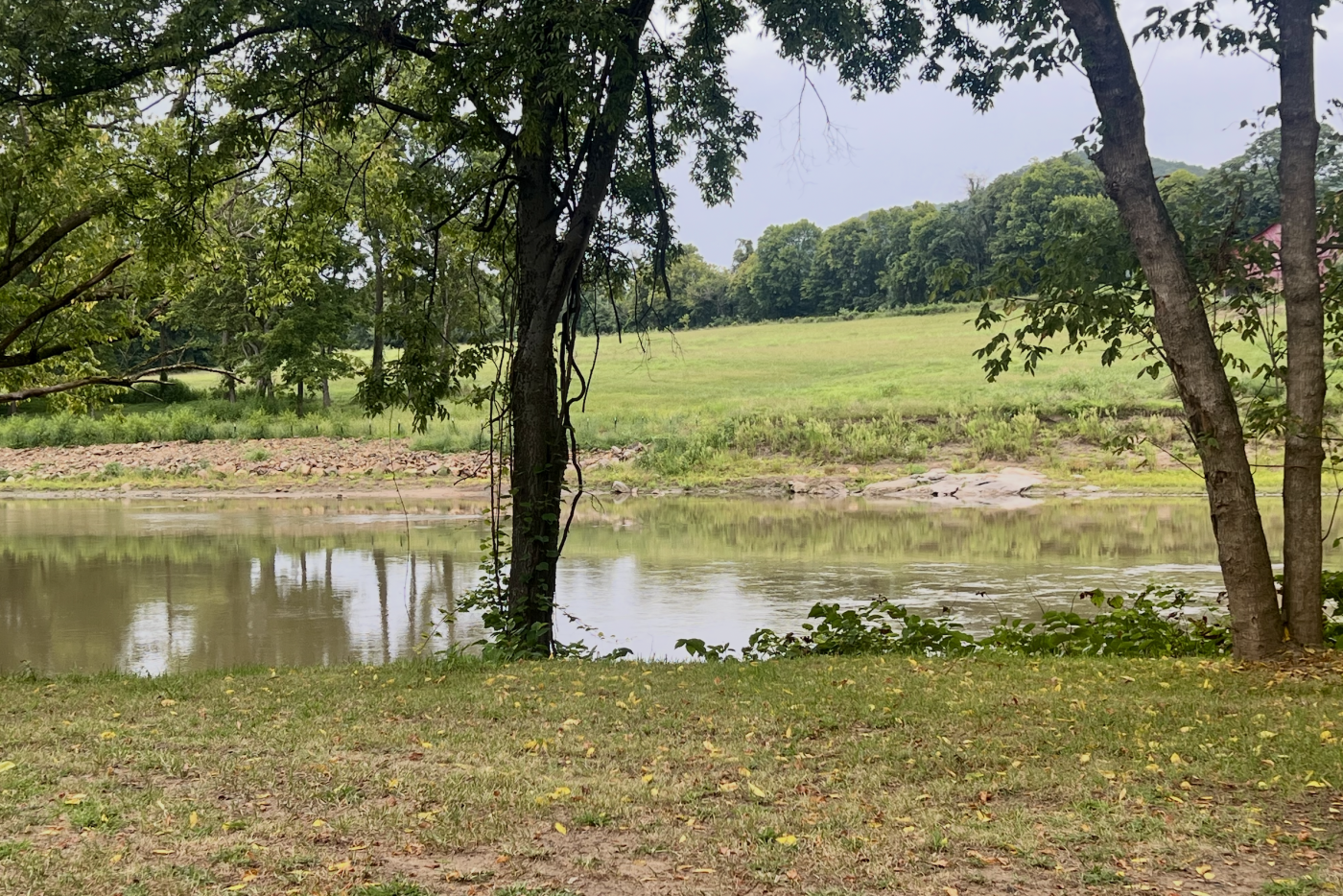
The Town of Hot Springs recently celebrated two recovery progress milestones with a newly reopened public library and a big step forward on the complex project of relocating the town’s wastewater treatment plant. Local leaders and volunteers have been working diligently to assess the community’s needs and move recovery projects forward after Hurricane Helene caused the French Broad River and Spring Creek to flood.
A New Site for the Town’s Wastewater Treatment Plant
The town’s aging wastewater infrastructure was badly damaged by the floodwaters. Immediately after the storm, repairs helped the system function again as a temporary solution, but leaders had to find land where new wastewater treatment infrastructure could be installed. In April, Town Attorney Larry Leake helped to finalize the purchase of 955 River Road, owned by Elizabeth Roberts and her brother, Randy Franklin.
A celebration was held on May 23 in Hot Springs to acknowledge the perseverance of the town staff, community leaders, and state partners, whose collective efforts led to the acquisition of the 36-acre tract of land where the town’s wastewater treatment plant will be rebuilt, just across the river from the damaged plant. Hot Springs Mayor Abigail Norton and Attorney Leake joined town board members Wendy Stancil, Lisa Gahagan, and Tammy Shelton for the celebration. Forrest Gilliam and Drew Christy from the Governor’s Recovery Office for Western North Carolina (GROW NC) also attended.
The $800,000 land purchase will be covered by an award from the North Carolina Office of State Budget and Management’s Helene Local Government Capital Grant Program. The state awarded nearly $2.4 million to the town for land acquisition for its plant relocation.
“We are thankful for the cooperation of the landowners and the dedication of all involved,” said Mayor Norton. “As a community, we are happy to be closer to the end goal for this important project.”
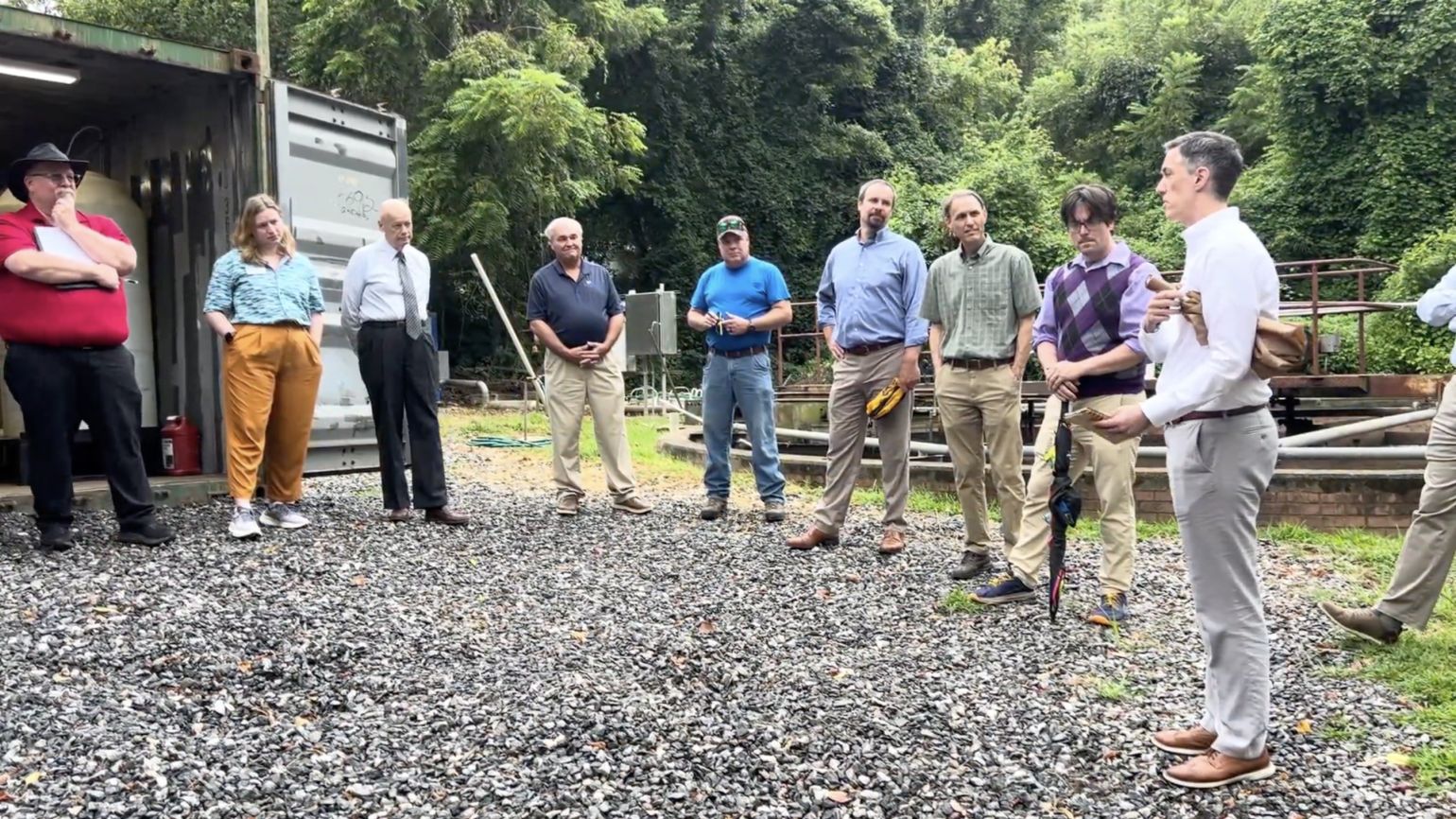
In August 2025, state representatives and leaders from the NC Department of Environmental Quality and the University of North Carolina Environmental Finance Center joined Mayor Norton and town leaders at the site of the original wastewater treatment plant to hear about the complexities of this project and share ideas for solutions. Infrastructure needs of this size and importance take time to plan and navigate, but community leaders knew they needed to move quickly.
"When we were out at the plant last August, it was clear just how complicated this project was going to be,” said Matt Calabria, Director of the Governor’s Recovery Office for Western North Carolina. “Securing this new site only happened because the town, the state, and our partners stayed at the table and kept moving - that's what a collective recovery looks like. Governor Stein has been clear that WNC communities won't be left to figure this out alone, and the state is going to keep showing up until this is done."
Finishing the Job
Before Hurricane Helene hit, the Town of Hot Springs received $4 million in funding from the UNC Collaboratory, in partnership with the UNC Environmental Finance Center, to help replace aging infrastructure, but challenges with land availability and cost caused delays. In the weeks after the storm, the NC Department of Environmental Quality and the Town of Spruce Pine worked together to connect the Town of Hot Springs with two packaged wastewater treatment plants at no cost to Hot Springs.
Hot Springs has since purchased package plants with funds from the NC Collaboratory’s Highly Treated Wastewater Pilot Program. The package plants have the capacity to cover all of the Town’s flows, are portable and can be moved to higher ground when the newly purchased future site is prepared and ready for it. They are operating now at the old, damaged plant site and when fully operational will meet and exceed the level of quality the former wastewater treatment plant could provide. They have allowed the town to continue to provide wastewater services while land for the new facility was being acquired and will likely do so for the next two-to-three years. The package plants will be re-used when they are sent over to the new site as a permanent feature, at great savings to the town.
Mayor Norton says the Town looks forward to hosting an official ribbon-cutting when the project is complete.
Funding for projects like this is critical to help communities recover from Hurricane Helene, and Governor Stein continues to advocate for additional funding to address critical unmet needs in the region.
Visit our WNC Recovery Stories page to find more stories about the people and organizations making a difference in western North Carolina.